Showing posts with label John McCain. Show all posts

Friday, April 21, 2017

On a Maverick Bromance

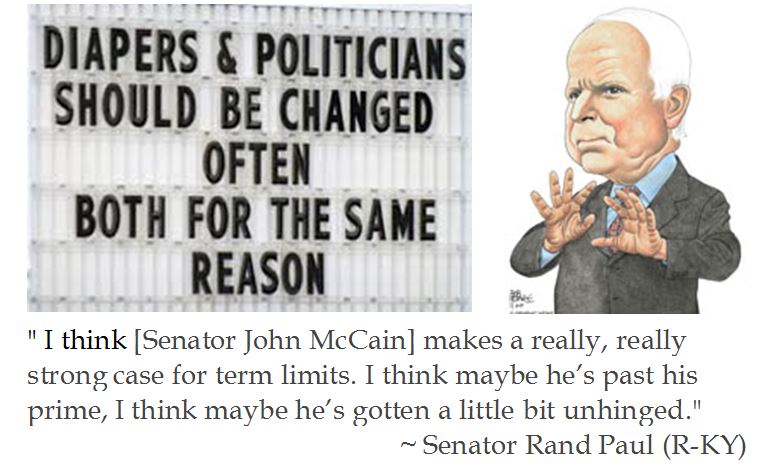
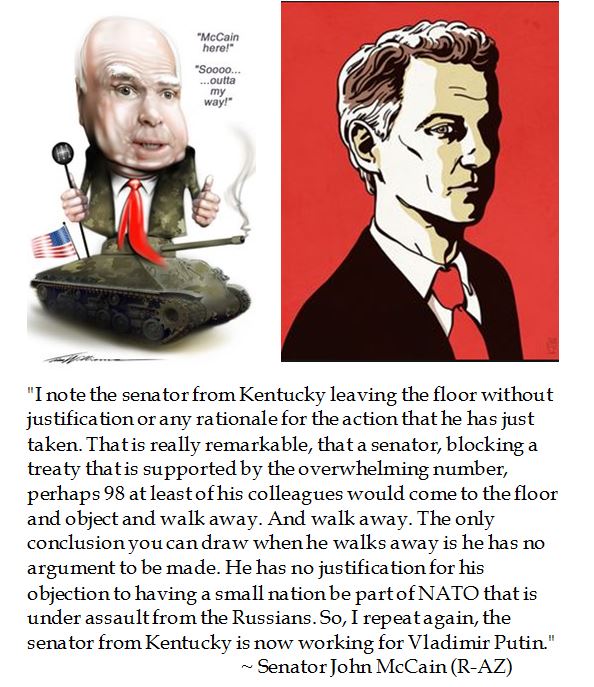
Senator Lindsey Graham on Senator John McCain


Not only are they both loyal to each other and a mutual admiration society but they both are quite hawkish on the American uses of force throughout the world.  But despite the caricature, they can apply more viral war paint. 


Monday, February 22, 2016

On Earned Media and Enabling


Campaigns must be able to spread the word about their campaigns when doing wholesale politics.  Thus campaigns must either buy media spots (paid media) or generate free media coverage (earned media).  This may be accomplished from  a spectacular campaign event, an unusual comment which is considered "newsworthy" or from media hits.

The 2016 Republican field has used different media strategies to varying effect. For example, former Governor Jeb Bush (R-FL) and his independent (but sympathetic) Right to Rise Super-PAC gathered a huge war chest to sway voters.  The Jeb! strategy was to earn legitimacy in Republican voters eyes by amassing a cornucopia of endorsements and shape the field by flooding the airways with paid media.

Obviously, this strategy did not work out well for the Bush scion.  Pointing to a score of retired generals who endorsed Jeb did not prove to have much sway.  Some of the name endorsements, like former Senator Bob Dole (R-KS) really seemed dated.  And Jeb bringing out his mother and former President brother in South Carolina smacked of desperation. This was too little too late and did not generate significant (or particularly positive) earned media

More telling was the money that Jeb and the Right to Rise Super-PAC burned through tens of millions of dollars on paid media.  The Jeb campaign and Right to Rise  flooded the airwaves in Iowa, New Hampshire and South Carolina but Bush fell in towards the back of the pack and suspended his campaign early in the voting.

The Washington Post published a telling graphic to illustrate the cost benefit of Republican Primary campaigns on paid media and actual votes.


The only campaign which spent more per vote than Jeb Bush did is Dr. Ben Carson. But as Carson Campaign's Business Manager (tellingly NOT a Campaign Manager) Armstrong Williams knows, branding can be quite expensive.  But it can also be lucrative for those charged with placing the ads.  Bush confidant Mike Murphy worked at the Jeb oriented Right to Rise Super-PAC but reportedly earned $14 million for buying the earned media.  Nice job if you can get it.

On the other end of the campaign publicity spectrum,  there is earned media.  Capitalizing on earned media has been one of the keys of Donald Trump's current success in the 2016 Republican Presidential Primary race.  Donald Trump has been a master creating controversy to keep the spotlight focused on him and earning lots of earned media. During the summer of 2015, Trump received saturation media coverage by the networks.   Trump's experience doing reality television already established name recognition and a branding of successful businessman in the eyes of many non-political low information voters.  By saying outrageous things and constantly attacking opponents who threaten his perch, Trump generates tons of earned media.

Another characteristic of the 2016 Trump campaign is a persistent attack on the media. Trump complains seemingly whenever a media organization reports something critical.  Trump will label them nasty, unfair or stupid.  Trump has gone so far to eject credentialed media with whom Trump does not like the line of their questions.

Trump has a trend of disparaging journalists who challenge him, from benign interviews with Katy Tor to hostile news conference exchanges with Jorge Ramos.  Most famously, Donald Trump launched myriad mysogenic slurs against Megyn Kelly, a Fox News anchor who questioned how Trump treated women. Several months later, Trump claimed that he was boycotting Fox News debates because of Megyn Kelly's inclusion, but later relented when Trump discovered that missing debates could hurt him amongst the electorate. To be fair, it might also have been a Trump technique of truthful hyperbole to further self promotion.

The attack dog mentality plays well for the angry electorate but Trump's tirades against Fox News seem somewhat counter-intuitive. Fox News has long been considered the major media outlet most friendly to Republican voices. Despite what Trump-eteers trumpet on social media, much of Fox News is friendly towards Donald Trump.  Trump has long done weekly call ins with Fox & Friends.  Judge Janine Pirro has a longstanding friendship with Trump and has formally endorsed him.  In addition, Sean Hannity is a personal friend, as is Bill O'Reilly.  Both are happy to give the Manhattan mogul airtime, but these shows do not necessarily endorse the candidate, although O'Reilly was obsequious in begging Trump to participate in debates (even promising to take milkshakes off the ledger).


So why does Trump peseverate on complaining about Fox News? The answer may be several fold. Trump loves positive news stories about himself. Despite all of the earned media, news hooks and friendly airtime through the auspices of Fox News, Trump has not won over Megyn Kelly thus he feels justified to rail against Fox.  Cynically, Trump might deduce that attacking Trump may appeal to his "silent majority" of blue collar (Reagan) Democrats that are poised to support a populist like Trump but their perspectives have been poisoned by constant Democrat lambasting of Fox News.  From a Machiavellian mode, by intimidating a strong opponent, it sends a bully message to the rest of the media and harbors a hint that they might lose access if they do not say nice things about Trump.

For running a comparatively shoe-string budget campaign, Trump has done well trading on celebrity, controversy and earned media access.  Cable channels love to run with Trump quips because they attract eyeballs and create controversy, which improves ratings. Trump tends to speak unscripted, so you never know what he is going to say.  As many campaign rallies have been at large venues, live media coverage can be justified as being newsworthy. Trump is not shy about doing interviews with those he can rely upon not to be hostile interviews, so he gets lots of airtime.

It is a curiosity that progressive channels like MSNBC and CNN have also been Trump obsessed. Is it because it is newsworthy? Does it attract eyeballs? Or could it be media manipulation to help pick the Republican nominee who will be easiest for a progressive to beat? Enabling through earned media isn't always an endorsement.


Some might conclude that Trump is brilliant in leveraging earned media to his advantage in the 2016 Election. But glowing coverage and earned media can only get a candidate so far.  And those who live by the media can perish by the media.  Senator John McCain had such a chummy relationship with the media on his Straight Talk Express, but the media mob turned on him after he won the 2008 Republican nomination. NBC News has bought all of the footage from Selena Scott's BBC documentary on Donald Trump but is holding the damning information until after the convention. The Lamestream Media has not focused on some of the business connections of the real estate tycoon.

Unless the Republican electorate is convinced that it is a Trump landslide, it is difficult to see how an earned media oriented strategy works to appeal in nine separate primary races during the so called SEC primary on March 1st.  Then on March 15th, there are several big winner take all states in Florida, Ohio and Illinois which have many media markets and are not built for quick barnstorming campaigns.

But Trump is not the only seriously competitive candidate in the Republican nomination race.  Senator Marco Rubio (R-FL) campaign relies heavily on endorsements and paid media.  Rubio and his independent (but aligned) Conservative Solutions Super-PAC had amassed a vast war chest.  Moreover, Senator Ted Cruz (R-TX) and his four independent (but aligned) Keep the Promise Super-PACs have raised lots of money and have been have resisted the temptation to blow the war chest early.  This paid media, combined with strategic earned media news hooks and organized Get Out the Vote drives, could deflate the Trump balloon.

Trump is short on specifics but loves to taut his poll ratings and his greatness on media availability, might not look as promising for earned media if the so called Trump Train is slowed down.  For example, Donald Trump accepted his second place finish in the Iowa Caucus' gracefully and did not use social media much the next day.  Consequently, Trump disappeared from the media spotlight.  The next day, Trump cranked up the smear machine questioning Cruz's eligibility and other outrageous claims that Carson had votes stolen from him during the Iowa Caucus.  That media circus strategy works well  for Trump when everyone is concentrating on the next state.  But when there are many simultaneous contests in diverse regions, that might not be a successful strategy, especially if the media (or the establishment) has anointed the new "golden boy" for saturation coverage.

Looking forward to the General Election, once the Republican nomination is decided, even friendly foils in the media become fierce foes. This is to maintain impartiality, to create controversy to become newsworthy and often reflects the liberal Lamesteam Media bias.  If a candidate is overly reliant on earned media from chaos campaigning and chummy Manhattan media ties, it could endanger the viability of such a candidacy. Oppo research leaks to the media about a candidate's shortcomings (or even silly stuff like crating a dog on top of a station wagon for a summer vacation) can dominate the media landscape and besmirch the reputation of a former media darling. While such jaundiced journalism would not alienate the hardened core of Trump supporters, it would bolster the ceiling of popularity and drive the debate to terra incognita

Wednesday, January 20, 2016

On Sarah's Choice


The already unconventional 2016 Republican Primary process was rocked by a charter flight between Anchorage, Alaska to Des Moines, Iowa for former Governor Sarah Palin’s (R-AK) of Donald J. Trump for President.  Gov. Palin was the maverick Vice Presidential choice of 2008 Republican nominee Senator John McCain (R-AZ), and her anti-establishment Republican conservatism was thought to carry cache with the Tea Party.

One of the beauties of the Tea Party is that it is not a leader driven movement.  It was sparked by a tax day 2009 protest about being Taxed Enough Already.  This movement occurred after Sarah Palin’s ascendency, so the Tea Party was energized by Palin espousing Tea Party policies but she did not necessarily embody the movement.  Even after it was clear that Palin was going to support his opponent in Election 2016, Senator Ted Cruz (R-TX) tweeted thanks to Palin for her prior support.


As a inveterate Tea Party type, I must admit disappointment in Sarah’s choice. Palin have often campaigned on limited government, ending government subsidies for ethanol, and strict adherence to the Constitution.  Yet Palin’s endorsement of Trump validates a candidate who hardly mentions the Constitution, panders for votes in Iowa by increasing ethanol mandates and whose rhetoric has an authoritarian edge.  In short, Palin chose populism over principle.

Since vaulting out of obscurity in Alaska, Sarah Palin has been a populist inspired conservative politician. Her choice to support Trump seems to drop the pretense of conservatism. Trump has cultivated a pugnacious appeal spoiling for a fight, although the objectives may be obscured. In 2008, Palin’s running mate John McCain relished being a maverick who will fight for you.  At the time, many Palin boosters thought that she would be a conservative oriented populist. Palin’s pick impeaches that perspective.
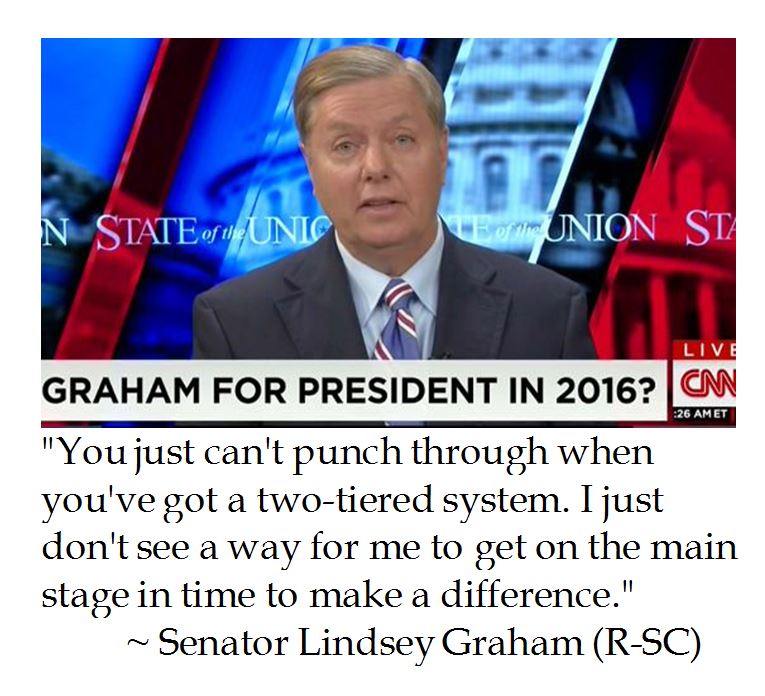
One might wonder what prompted Palin’s choice.  Well, Palin has been out of the limelight for a while.  After Palin left the Alaska Governorship in 2010, she was a political commentator for Fox News from 2011-2015.  When Fox News parted ways with Palin, Palin established the Sarah Palin Channel in 2014 but pulled the plug on the $9.95/month subscription price after a year. Now her video content is available free on Facebook. Palin also hosted Amazing America with Sarah Palin on the Sportman Channel in 2014.  This is a far cry from her GOP kingmaker potential in the early days of the Tea Party. Sarah's choice certainly put her back in the limelight, for now.

Much like Donald Trump, Sarah Palin is good at creating headlines for political junkies, even if both speakers have trouble stringing together sentences in their evocative appeals.  It is also a fair assessment that Trump and Palin either strongly appeal to supporters or loathing from opponents.

Will Sarah's choice help Donald Trump in the Iowa Caucuses?  Trump seems to be relying upon earned media and hype to drive supporters to the Hawkeye Cauci instead of an organized ground game. It is thought that Trump would have to garner a groundswell of new voters to go to the Caucus.  Social Media sports many Trump trolls who trumpet their leader, but it is hard to see support in Iowa itself.  Trump may hope that Palin’s endorsement will put them over the top, but he may end up wondering how that hopey-changey thing worked out for him.

In the end, Palin's endorsement of Trump may be a good thing for the Tea Party. It will clarify if the movement is meant as a populist rage against the GOP Establishment's machine or if it stands for conservative Constitutional principles.  In other election cycles, the latter group would have little choice but to opt for a populist.  But as it stands for the 2016 Iowa Caucuses, Tea Party conservatives  can choose Dr. Ben Carson or Senator Ted Cruz without sacrificing their principles. 

Monday, December 21, 2015

Why Graham's Gone

Senator Lindsey Graham drops out of Republican Presidential race


December 21st was the last day for filing to be on the 2016 South Carolina Republican Presidential Primary ballot.  It is no coincidence that it was the same day the Senator Lindsey Graham dropped his quixotic campaign to be the GOP POTUS nominee.

Aside from absorbing accolades from the press corps in several of the under-card Republican debates,  Lindsey Graham has been a non-entity in the Republican Presidential Campaign.  The only place in which he excelled was consistently coming in last place all year in The Blaze's monthly Presidential Preferences among Glenn Beck listeners.

It is questionable if Senator Graham ever had a realistic pathway to primary victory in the GOP.  His best hope would have been to win as a favorite son in South Carolina and parlay primacy in the Palmetto State into Big Momentum going in the nine SEC primaries the week afterwards.  At that point Graham might have held some sway with delegates if there was an open Republican convention in Cleveland. Still those were pretty impossible dreams.

Alas, Graham only garnered 0.5% in most national polls and perhaps 4% in his home state of South Carolina. Graham presumably did not want to be thought of like Gov. John Connolly (D/R-TX) who famously spent $10 million to win 1 delegate in South Carolina during the 1980 cycle.

 Even though Graham won re-election to his third term in South Carolina in 2014, a colossal failure on the Presidential Primary stage might be a memory which loomed large in a state where he was considered a weak incumbent and only took 55% in the 2014 General Election.

Aside from ego, Graham seemed initially driven to strengthen the American military, especially during a time of war. Some might suspect this issue oriented campaign was meant as a counterbalance to a more neo-isoloationism espoused by his libertarian Republican rival Senator Rand Paul (R-KY).  However, Graham shifted to taunted Donald Trump from the small debate stage. He may calculate that his absence in the Republican field will allow his Senate sidekick, Senator John McCain (R-AZ) to make a more consequential endorsement for the New Hampshire primary, which McCain won in 2000 and 2008 so his word may carry some weight.

Besides, Graham's reputation for warning "We're at war" along with his 30 plus years service in the National Guard may make him a candidate to be Secretary of State in a prospective Jeb! or maybe Marco Rubio administration, particularly if the Graham endorsement is timely and effective.

Friday, October 23, 2015

Plotting Pathways to Primary Victory By Thinking In Time


When chatting with a friend who is not a political junkie, I questioned if Carly Fiorina’s strong Republican Debate performances can translate into strong showings in Iowa.  My friend questioned the value of the Iowa Caucuses, considering that televangelist Pat Robertson won. With the Iowa Caucuses just a 100 days away, it is worth considering the importance of the early contest and assessing paths to primary victory. 

This dialogue prompted me to review all Republican and Democrat Presidential Primary campaigns since 1976. The assertion that Pat Robertson won is an understandable misconception. He actually placed in second in 2000, thus proving that a campaign need not win in Iowa, but being in the top tier is important to survive the winnowing out.  In the case of Senator Fred Harris (D-OK) in 1976, a fourth place finish with 9.89% support had Harris proclaim that he was "winnowed in” the race. Iowa many not pick a winner, but it typically does thin the field out.

Favorite son candidates can sometimes do well in Iowa just because of their connection or proximity to the Hawkeye State.  Arguably, this was Rep. Dick Gephardt’s (D-MO 3rd) strategy in 1988.  Some thought that such connections would have similarly helped former Congresswoman  Michele Bachmann (R-MN 6th) or ex Governor Tim Pawlenty (R-MN), but this pathway to success proved futile.  There was some speculation that in the 2016 cycle that Governor Scott Walker (R-WI) would have greatly aided by his native Iowan ties and being a next door neighbor, but that was not enough in the 2016 election cycle. 

Iowa and New Hampshire are important because they test a can test a candidates endurance, organization and strategy.  Because voters in the early primary states take their participation seriously, they expect to have lots of one-on-one encounters with hopefuls (retail politics). Former Senator Rick Santorum (R-PA) won Iowa in 2012 on a shoestring budget because of a grassroots effort to have town halls in all 99 counties. 

What makes  the “Haweye Cauci” unique is the fact that Iowa voters take their participation seriously and expect to be courted by aspiring politicians.  Then there is the challenge of getting voters to show up at the Caucuses.  Not only must they be motivated to spend several hours on a snowy Iowa evening to play politics, but they must represent their candidate.  There are not private ballot boxes for Caucuses so Caucus goers must argue and advocate for their candidate. Thus a “silent majority” who acts according to their principles in the sanctity of the ballot box will not do.  They must go before their neighbors and plead their candidates’ cases.


Iowa Howard Dean campaigner 2004
But retail politics needs to be done right to accommodate for Iowa Stubborn.  In 2004, former Governor Howard Dean (D-VT) was the presumptive favorite as he had a large stash of cash from internet fundraising and could mobilize an army of college students to knock on doors. Well, Hawkeyes did not cotton to brigades of out of state whipper-snappers in bright orange ski hats prodding people to the caucuses.  Thus Dean was in a battle for third place.  To rally the troops after the Caucus results were announced, he did the infamous Howard Dean scream, which was the beginning of the end for him.


The Iowa contest may only sport 30 delegates split amongst the candidates, but doing well gives what 1980 GOP candidate (and later President)  George Herbert Walker Bush called “The Big Mo”.  Good publicity from being win place or show in Iowa can help for the next contest in New Hampshire. 


But where “the Big Mo”  really matters is in the “Invisible Primary” for donor dollars.  When primary voters start selecting candidates (as Iowans do not vote), traditionally financial supporters either open the floodgates or cut off the flow of funds.  People like to bet on winners and may jump on the bandwagon to curry favor with underdogs who outperform expectations. Some may claim that the “Invisible Primary” ends before selection process begins, because money in the bank allows for prudent allocation of resources. But sometimes candidates on the brink of financial collapse, like Senator John McCain in 2008 or Senator Rick Santorum’s shoestring start  in 2012, needed the infusion of finances and publicity after doing well (or significantly beating expectations) in Iowa.


Doing well in the donor primary makes a difference in expanding organization and financing media buys several weeks down the road to effectively compete in a series of contests held on the same day, like the SEC primaries (March 1st) or in a populous and diverse state in which wholesale politics is essential, like Florida (March 15th) 

In 2016, the GOP has rules that primaries before March 15th may have proportional distribution of delegates, after that time it is winner take all.  Party rules this cycle also require candidates to win six contests. Candidates need to find their pathway to victory.  

Some Republican candidates choose not to put as much emphasis on Iowa as it is not a reliable predictor of success and the agrarian and evangelical midwestern voters may not suit certain campaigns. The eastern and western edges of Iowa seem to vote for more urban and moderate candidates in GOP primaries while the center of the state can be characterized as quite evangelical and values voters. Santorum squeaked out a victory in 2012 with a campaign appealing to value voters and retail politics. Governor Mike Huckabee (R-AR) beat Governor Mitt Romney (R-MA) 30%-27% by winning with “very conservative” voters, many of whom were evangelical value voters.

The importance of Iowa was demonstrated by the quick reversal of a social media faux pas by Donald Trump.  The brash businessman has earned a reputation of raring for a fight and never backing down. While Mr. Trump has been top of the Republican polls for the last 100 days, but a recent poll showed that he dropped in second place in the Hawkeye State behind another outsider candidate Dr. Ben Carson.  Trump's Twitter account, which he had leveraged for publicity to personally comment during the Democrat debate, forwarded a snarky dismissal of the poll, denegrating Iowans.  


Within a couple of hours, the Trump campaign deleted the tweet and expressed the regret for a young intern for the gaffe.  OK. so much for spoiling for a fight and never backing down as well as the aura of authenticity. But it goes to show the importance of not offending Hawkeyes and alienating the Charm of Iowa Stubborn 


If not Iowa, Republican candidates have to rely on doing well in New Hampshire, the first primary state.  The Granite State had a long reputation for picking Republican winners, with a couple of notable recent excecpion. Typically, New Hampshire voters are contrarian rejecting Iowa’s lead. Candidates sometimes camp out there to do tons of town hall meetings to maximize retail politics.   Senator John McCain (R-AZ) used it as his breakout moment in 2008. Conventional wisdom is that if you don’t do well in Iowa or New Hampshire, it is wise to hang it up.

A few contemporary candidates have sought to eschew the Iowa Caucuses and the First Primary in New Hampshire, much at their peril.  In 2008, Mayor Rudy Giuliani (R-NYC) calculated that he would win the Sunshine State due to the number of transplanted New Yorkers. So he essentially skipped Iowa, New Hampshire, Michigan, South Carolina and Nevada. To his chagrin, Giuliani only garnered 14.7% of the vote.  On top of that, any delegates won were cut in half since the Florida primary was held too early for Republican rules. 

In 2012, Gov. Jon Huntsman (R-UT)  iconoclastically set up his campaign HQ in Orlando thinking that Florida would lead to victory.  But Huntsman came in third in New Hampshire and dropped out by Florida.

The 2016 GOP Primary cycle features a crowded field and seems strongly influenced by debate performances.  After the second debate at the Reagan Library, businesswoman Carly Fiorina catapulted up to third place in the national polls.  All of that is well and good, but political pundits need to consider what is her plausible path to victory? At this late stage in the campaign, can an unknown candidate build an organization for effective retail politics in the caucuses or does someone like Fiorina hope that Granite State contrarianism carries the day?  Would publicity from an early primary win be enough to build a successful campaign for the SEC primaries or is the hope to be the last acceptable alternative to a frontrunner or establishment candidate?

Frontrunners in the summer before a Presidential campaign year typically do not get the nomination, otherwise there might have been a President Dean (2004), President Gephardt (2008) or President Giuliani (2008). Hardball questions often hinder early frontrunners.  The trick is to peak and the right time and not get in too late.  In the 1980 cycle, then former Governor Ronald Reagan only announced his candidacy in November 1979 and had to rush to organize for Iowa.  But back then a late entry was feasible.  In the summer of 2007, Senator Fred Thompson (R-TN) announced in late for the 2008 primaries and had trouble getting traction and fundraising.  In 2011, Governor Rick Perry (R-TX) joined the 2012 GOP primaries after the Ames Straw Poll, but was hindered by the late start and a monumentally bad debate performance. 

In the 2016 cycle, it has been postulated that Senator Ted Cruz (R-TX) is wisely waiting in the background to pounce when the primaries start.  Cruz was the first to announce with a strong religious liberty stance that would appeal to evangelical voters.  Cruz is accused by Republican Party elites for pushing for show votes on principled policies (e.g. really repealing Obamacare, Iran Nuke Deal, defunding Planned Parenthood) which underline his “outsider” bona fides while still serving in the District of Calamity.  Cruz has a strong campaign war chest.  All signs point to strong organization in early contests and the SEC primaries.  Cruz is also competing in very small contests (like Guam and Puerto Rico) which are essential to winning enough contests to be considered for nomination.  Cruz is a skilled debater who has made good use of the limited time he has been given in debates and he has not made enemies with his opponents. Yet at the beginning of autumn 2015, Cruz is placing 5th out of 15 with 8% support in polls. 

Cruz’s path to victory would need to do well in Iowa (especially with very conservative and evangelical voters), be competitive in New Hampshire, rebound in conservative South Carolina and then be successful in the bulk of SEC primaries (including his home state of Texas) on March 1st.  This slow and steady success strategy does not have the sizzle of Trump or the establishment imprimatur for former Governor Jeb Bush (R-FL), but is solid strategy that has a pathway to victory.  Whether or not this works remains to be seen. 

Looking at the GOP primaries methodically may not be as much fun as hobnobbing about the horse race with always changing polls, but it understands the primary process and gives benchmarks for successful strategy rather than a blind bandwagon approach to campaigns. 

Sunday, August 9, 2015

Betwixt Bluster and Boorishness


The first prime time 2016 Republican Presidential debate featured the top ten candidates based on national polling.  Some complained that having so many politicians on the stage gave short shrift to substantive consideration about the issues, in so far that candidates would have ten minutes or less each in the spotlight.  Still the exercise allowed America to become acquainted with the aspiring GOP nominees, discern their demeanor as well as shed some light on where they stand politically. 

Based upon polling popularity for the blockbuster Fox News debate was Donald Trump, the billionaire businessman who bravado and brash campaigning has stolen much of the early political coverage.  As the front-runner, he got the most attention and harsh questions from the moderating panel. Early in the debate, Megyn Kelly inquired about how Mr. Trump he referred to women --

“Mr. Trump, one of the things people love about you is you speak your mind and you don’t use a politician’s filter. However, that is not without its downsides, in particular, when it comes to women.
You’ve called women you don’t like 'fat pigs, dogs, slobs, and disgusting animals.'"

Trump tried to brush off the challenge by qupping that he was only referring to Rosie O’Donnell. This was neither well received by the booing audience nor Megyn Kelly who insisted that these degrading insults were directed at more than the so called “Queen of Mean”. Trump shifted his argument to noting that America is too politically correct and we do not have time for that. 

Bluntness and being anti-PC reflects the anger of the so called Silent Majority who have propelled Trump to the top of the summer polls. But this retort was unsatisfactory to an abrasive executive who seems oriented to intimidation. Trump interjected that he thought that Megyn Kelly was disrespecting him and not being nice. Trump asserted that he had always treated her well and Trump passive-aggressively asserted he might have to rethink that consideration, but that he would never do that.

After the debate ended, Trump (or his staff) was up until 3:45 a.m.  tweeting. This social media sharing attacked Megyn Kelly and he also retweeted a message declaring that Kelly was a bimbo.


 Not to be outdone, during a day after media appearance on CNN, Trump berated the Kelly File host by saying: “You could see there was blood coming out of her eyes. Blood coming out of her wherever.” 


Whatever could Mr. Trump meant (sic)?  The best the Trump team could spin on that pointed choice of phrase was that Mr. Trump meant “whenever”.  Sure. 

Aside from boorish bimbo eruptions concerning Megyn Kelly, some Trump-etteers complain that Kelly is not a conservative.  That may well be true, but over 90% of the press corps is liberal. Tim Russert was a liberal from upstate New York who would ask hard gotcha questions of both sides hoisting a politico by their own petards  Megyn Kelly seems cut of the same cloth, though it was troubling to hear post debate softballs which Kelly tossed with DNC Chairwoman Debbie Wasserman Schultz.

It is foolish to expect as a Republican, which Trump now says that he is, that he will receive fawning treatment from the political media. But if Mr. Trump feels threatened by pointed political questions, how would he react in the Oval Office against our adversaries or even allies?

There was scuttlebutt that big GOP donors and the Republican establishment had ordered a take down of Trump. Instead of the assault  mainly coming from Trump’s rivals to the “Game of Thrones”, the attack stemmed from the biased panelists of Fox News. Granted, they do have Karl Rove on all the time, it is dubious that FNC takes their marching orders from “the Architect”.  How about aggressive journalism which asks tough questions, trying to create controversy and attract eyeballs?

In response to the misogynistic musings  coming from “The Donald”, Eric Erickson uninvited Mr. Trump from participating in the the Red State Gathering in Atlanta.   Erickson wrote:  

“[I] also think that while Mr. Trump resonates with a lot of people with his bluntness, including me to a degree, there are just real lines of decency a person running for President should not cross.
His comment was inappropriate. It is unfortunate to have to disinvite him. But I just don’t want someone on stage who gets a hostile question from a lady and his first inclination is to imply it was hormonal. It just was wrong.”  

Now Trump-etteers discount Erickson as just a tool of the establishment.   It seems in Trump territory, it’s always someone else’s fault.  That seems like such a familiar modus operandi, except there was no rush to blame Bush (for now).

Res ipsa locquitur is a Latin phrase for “It speaks for itself”.  Trump’s pugnacious predilections to berate women whom he dislikes epitomizes the “war on women” gist of Kelly’s hard question. Implying that Kelly’s questions stemmed from menses is sexist, disrespectful an degrading. Suggested synonyms from Webster's dictionary for boorish are: course, uncouth, loutish, churlish. 

The derogatory demeanor in the exchanges with Megyn Kelly speaks directly to Trump’s reputation for dealing with women with whom he disagrees.  This was not a off the cuff quip, this is a persistent pattern of behavior.  Are these qualities which Americans wish to see stemming from the Oval Office.

This derogatory demeanor speaks directly to Trump’s reputation for dealing with women with whom he disagrees.  This was not a off the cuff quip, this is a persistent pattern of behavior. 

But it’s not the only instance of boorish behavior coming from Team Trump.  Michael Cohen, special counsel to Donald Trump and a Vice President of the Trump Organization, threatened a political reporter who was going after a marital rape allegation by Ivana Trump during her 1980s divorce by suggesting:

"I will make sure that you and I meet one day while we're in the courthouse. And I will take you for every penny you still don't have. And I will come after your Daily Beast and everybody else that you possibly know, So I'm warning you, tread very f---ing lightly, because what I'm going to do to you is going to be f---ing disgusting. You understand me?"

  Politics isn’t beanbag but such bullying behavior is remarkable.  In an environment in which the Lamestream Media lap dogs cower so as not to lose access to the White House, I shudder to see such thuggish tactics employed on professional practitioners of the freedom of the press.  Trump put little distance from his errant aide. After all, Cohen was just doing his boss’s bidding and using intimidation tactics that seem culled from the Art of the Deal (1987).

Then there was the McCain mutiny.  During a candidate forum in Iowa in July 2015, Frank Luntz got Donald Trump to comment on Senator John McCain (R-AZ). McCain had recently called the 15,000 people who turned out at a Trump event in Phoenix as “crazies”.  Trump berated McCain as being a loser and then followed up by insisting: 

“McCain is not a war hero. He’s a war hero because he was captured. I like people that weren’t captured, okay? I hate to tell you that. He’s a war hero because he was captured, okay? And I believe perhaps he’s a war hero but right now he’s said some very bad things about a lot of people.”

 Afterwards, Trump refused to apologize according to the civic script. Professional political pundits thought that the outrageous comments would sink Trump’s candidacy, but it only increased his stature as a primary celebrity.

The campaign is in its early stages and there is a crowded field. It was unrealistic to expect precises platform positions in a first debate, but two hours on center stage can give a feel for the demeanor of a candidate and offer indications on his or her likeability.  

During the debate, Donald Trump was bold enough to raise his hand to say that he would not commit to supporting the eventual Republican nominee (unless it is himself) nor would he rule out being spoiler third party Presidential candidate.  Bold and brash as well as being self centered and unconventional.  These qualities may appeal to anti-establishment political firebands, while potentially alienating the Republican base which actually votes in Republican primaries.  Pugnacious personality who is always spoiling for a fight may make for fun reality television but it is dubious if Americans seriously want that in our living rooms each night as Commander in Chief.

 When someone tells you who they are, believe them. Between the bluster and the boorishness, we are getting the measure of the man. Time will tell if Trump’s braggadocio and bullying can politically cash the checks which his mouth is underwriting.  There is plenty of opposition from the Silent Majority to the craziness contained in Political Correctness, however Greg Gutfeld is right that political incorrectness is speaking the truth but not necessarily lewdness. 


Thursday, May 28, 2015

Rand Paul: ISIS Exists Because of GOP (!)(?)

Rand Paul on ISIS

Republican Presidential hopeful Senator Rand Paul (R-KY) appeared on MSNBC to hawk his book "Taking a Stand: Moving Beyond Partisan Politics to Unite America" (2015) and expand his political base in 2016.   Senator Paul is renowned for his libertarian politics policy but seemed to have mollified his non-interventionist foreign policy tendencies since he announced his candidacy.  Senator Paul appeared to honor his father without embracing the isolationist extremism which characterized the career of his father, former Representative (and quixotic 1988 Libertarian Party and 2012 GOP Presidential candidate)  Ron Paul (R-TX 14th and 22nd).


Kevin Kallaugher

However when Joe Scarborough interviewed Senator Paul on the Morning Joe, Senator Paul posited that the GOP which was the reason that ISIS exists. 


This is a curious conclusion, as the precipitous withdrawal from Iraq and Afghanistan occurred during the six years of the Obama Administration.  This was on top of Mr. Obama's ever fungible red line on Syrian chemical weapons

Senator Paul's inflammatory utterance has several unfortunate implications for winning the GOP nomination.  Firstly, it violates Reagan's 11th Commandment not to criticize your own party when campaigning.  Secondly, Senator Paul embraced the isolationist extremism, which puts him at odds with most party loyalists who will be participating in the nomination process. Thirdly, Paul's foreign policy pronouncement echoes his father, which was on the fringe of the Republican party.  Fourth, Paul's extended Morning Joe interview was an exercise to "get" Republican neocon hawks like Senator John McCain (R-AZ) as well as McCain's minion (and quasi GOP Presidential candidate) Senator Lindsey Graham (R-SC). Furthermore, the cantankerous close contributes to the perception that Senator Rand Paul is thin skinned


h/t: KAL 

Wednesday, May 6, 2015

The Huckster on Running for Higher Office

Mike Huckabee on Politics

Former Governor Mike Huckabee (R-AR) has distinguished himself as a candidate for the Republican nomination in 2016 by coming out of the gate attacking his fellow Republican opponents.


 Perhaps it was lost for Gov. Huckabee on the mythical "third tablet" of Mount Sinai.


Several of the top tiered GOP presidential candidates, Senator Ted Cruz (R-TX), Senator Rand Paul (R-KY) and Senator Marco Rubio (R-FL) are "moonlighting" for the GOP nod as they continue their elected roles in the U.S. Senate.  It should be noted, however, that Senator Rubio has vowed not to seek re-election for the Florida Senate seat as he threw his hat in the ring for President.


Obviously, Governor Huckabee is not observing the Reagan 11th commandment "Thou shall not speak ill of thy fellow Republican".


Be that as it may, we need not judge Gov. Huckabee on words alone, as this is not his first time to the presidential rodeo.  

It is true that Governor Huckabee was not holding office when he ran for President in 2008, as his term in Little Rock expired January 8, 2007.  However, the telling fact is whether "The Huckster" applied the same standard to his 2008 opponents as he did to the current crop of candidates.  

Of Governor Huckabee's many swipes against his opponents in the 2008 cycle, he was remembered for spreading anti-Mormon innuendo against former Governor Mitt Romney (R-MA) rather than taking pot shots against Senator John McCain (R-AZ) for holding office while running for President.

If Governor Huckabee folksy populist quest for higher office is not successful, there is little chance of going back to his gig at Fox News, after trash talking "the trashy" women on Fox News Channel,

Friday, January 30, 2015

John McCain: "Get out of here, you low-life scum.”


The Senate Armed Services Committee was preparing to hear testimony from three super-annuated former Secretaries of State when the proceeding was rudely disrupted by Code Pink.  The self proclaimed "peace and social justice" NGO dedicated to protest all US wars through obnoxious grandstanding sought to make a citizens arrest of 91 year old Henry Kissinger.  Kissinger was President Richard Nixon's (and later President Gerald Ford's) National Security Adviser and Secretary of State .


It does not seem like the Capitol Police were prepared for the street theater in Senate hearing rooms, as the pink protesters were at first escorted to the back of the room.  When they continued to agitate, Chairman John McCain decried their lack of decorum and bid a rude adieu to the ideologically addled agitators. The Chairman's ire might have been aided by his memory of spending five and a half years as a POW in the Hanoi Hilton during the Vietnam War. 

What was truly outstanding was former Reagan Secretary of State George Schultz's response to the ruckus.  The 94 year old diplomat stood up to confront Code Pink and then declared:  “I salute Henry Kissinger for his many contributions to peace and security.” This led to a standing ovation which drown out the progressive protesters. 

It was curious that Code Pink wanted to refight the Vietnam war nearly 40 years after the fall of Saigon.  If they wanted to confront a Secretary of State present with a more recent war record, they could have gone after Clinton's second Secretary of State Madeline Albright, who was at the helm at Foggy Bottom during the NATO bombings in Serbia during the Spring of 1999.  

Ironically, Code Pink staged this protest the same day the secret tapes of Congressmen and the Pentagon communicating with Libyan officials in order to  sidestep the warmongering strategy  of  Obama's Secretary of State Hillary Clinton, who led America into what was deemed  an unnecessary war in Libya.  Was that really practicing "Smart Power"

But progressives have different rules for Democrats and it is dubious if these anti-war agitators would challenge their comrades. 


Tuesday, December 16, 2014

Jeb Bush on Exploring


Former Florida Governor Jeb Bush (R-FL) has indicated on Twitter and Facebook  that he is actively exploring a run for the White House in 2016.  This announcement is no great surprise, as he has been toying with this decision for years, and facilitating for faux leaks.  Last week, the press reported Jeb's secret meeting with Senator John McCain (R-AZ) on how to win the nomination without pandering and presumably circumventing the influence of the Tea Party.  

The two term Governor has a name which acts as a two edge sword, as he is the son of President George H.W. Bush and brother of President George W. Bush.  Due to the legacy and residual resentment for "41" and "43", a prospective "45" may find that his surname is a four letter word in more ways than one.


Thus Jeb Bush seeks to be run on his own record.  So as Jeb explores embarking on a run for the White House, voters ought to explore Jeb's record and his fundamental policy positions.

Gov. Jeb Bush has been outspoken about encouraging amnesty and comprehensive immigration reform.  In addition, Governor Bush was noted for making educational improvements to the Sunshine State's school system.  However, his steadfast support of Common Core brings charges of crony capitalism benefiting establishment Republicans with education businesses.   By endorsing effective immigration amnesty and Common Core are not popular among grassroots Republicans.  No wonder why Jeb visited "Juan" McCain for his advice.  

There is little doubt what Jeb will find in his explorations.  Republican Party activists might find a white elephant and certainly a RINO. 

Friday, April 25, 2014

John McCain on Illegal Immigrants


"Maverick" Republican Senator John McCain (R-AZ) proclaimed at a Kennedy School of Government Forum at Harvard University  that "the Republican Party" will never win another national election unless it enacts comprehensive immigration reform, such as was pushed by his Junta de Ocho (Gang of Eight).

Juan McCain out to consider that his party probably will not win an election with a massive amnesty which is sold to the public as a pathway to citizenship.

Of course, Tea Party types would insist that if the senior Senator supports such a questionable Comprehensive Immigration Reform with a pathway to citizenship is a way that a politician who evades leadership would not have to worry about being elected again by Copper State conservatives. 


Wednesday, February 19, 2014

A Bit about Euromaidan -- You Say You Want a Revolution?

As the world watches the 2014 Winter Olympics in Sochi, Russian Federation, there is unrest in Kjiv, Ukraine.  Nearly twenty years ago, Nike advertised the that Revolution would not be televised.  That proves untrue as Espreso TV was carrying it live as paramilitary attacked the peaceful protestors throughout the night of February 19th.   First news reports indicate that 22 fatalities with 1,000 people injured,  but  based on the constant pops in the night air and the burning pyres of the barricades  in the main square, this could be a low estimate. 

[***]

The EuroMaidan protests began on November 21st, 2013 when protestors gathered at Independence Square in Kyiv, the capital of Ukraine when President Yanukovych suddenly swayed away from an associate agreement with the European Union and chose to strengthen economic ties with Russia.  The protest snowballed on November 30th when a group of students were attacked by the police, and it became a national movement.  

 
Protestors have been gathering in Independence Square, in the bitter Ukranian cold day and night to protest.  But people do not get passionate about just trade agreements.  People are concerned about the rampant corruption in Ukraine. President Yanukovych’s aloofness and unresponsiveness to the will of the people engenders ire.  And of course, the heavy handed tactics, which killed five protestors in late January and the wider violence and bloodshed today. 
While Kjiv’s main square constantly has 20,000 protestors (and can swell up to 800,000), there are said to be mini Maidans throughout the country, but much more pronounced in Western Ukraine.    George Weigel characterized the Euromaidan protests as the rising up of a nation which is tired of being ruled by thieves and barbarians and stand against a thugocracy. 

[***]


[***]

These Euromaidan protests have been going on for the last three months.  It is a region of the world that we are familiar with through the Cold War.  Now that we know the protesters goals and modus operandi, what is the Yanukovych Ukrainian government position, and how much which "friendly" neighbors help resolve the uprising?

[***]

  Aside from geopolitical considerations, this is a people who wished to be freed from tyranny.  We ought not abandon such lovers of liberty as the Obama Administration did with the Green Revolution in Iran in 2009.   Then again, a God fearing people protesting against thievery and heavy handed tactics may not find much sympathy in today’s corridors of power of the District of Calamity. 

 SEE MORE at DCBarroco.com

Sunday, October 6, 2013

The Sham of Senate Civility


After the attempted assassination of former Representative Gabrielle Giffords (D-AZ 8th), there were calls for civility in political discourse.  In the aftermath of the Tucson shooting,Senate Majority Leader Harry Reid said:

Being more mindful of the weight of our words always helps. We have much more to gain than to lose from civility and discretion. …

Some may be inspired by the town halls of two Augusts ago. Others by the heated election debates. Some may be motivated by the conversation that started after Arizona. And many will seek more civility simply because it’s the right thing to do. Whatever the reason, I hope the turn to more responsible rhetoric is more than empty rhetoric. I intend to do my part.

But what Democrats really meant by civility seems to be to silence their ideological opponents with the cudgel of civility via the Lamestream Media without moderating their raucous rhetoric or correcting their faux pas. 


A recent example of this incongruity between rhetoric and reality was Senator Reid's recent call for civil discourse on the Senate floor.  The Senate Democrat Majority Leader had called House Speaker John Boehner a coward for not standing up to anarchists in his own party who Reid implied precipitated the Federal Government shutdown.   Reid also derided his colleague Senator Ted Cruz (R-TX) as the "very junior Senator from Texas"  who was acting as the "Joint House Speaker."

Yet Senator Reid lectured the Senate about decorum:

We all have to understand that these rules create a little bit of distance so senators are more likely to debate ideas and less likely to talk about personalities. And if we do that, we maintain a more civil decorum as a result. So I bring this matter to the attention of senators because we've fallen out of this habit. It's gotten worse the last month or so.
 
To be fair, Senator Reid kind of apologized for his harsh words by intoning:  "Some recent stories have even suggested that the speaker is keeping the government shut down because I hurt his feelings. If that's true, I'm sorry that I hurt your feelings."  

So it's OK to capture headlines and slander your opponents, and then give a tentative mea culpa "if I hurt your feelings"?  Where does someone go to get their reputation back?

Reid advocated not mentioning other Senators by their first names and addressing their colleagues in the third person.  This Senate Speak, a District of Calamity (sic) patois which Senator John McCain (R-AZ) has mastered  forces the speaker to call enemies "My Friends" before rhetorically excoriating them.  No wonder why so many ordinary people are turned off by politics. 

Senator Cruz has been the target of Democrats derision in the Federal Government Shutdown fight.  Cruz gave a short floor speech which exposed this Sham of Senate Civility to conceal political perfidy.


There has been a concerted effort in the Lamestream Media to discredit Ted Cruz as just advancing his own presidential ambitions by prominently fighting for defunding Obamacare.  This scathing critique comes from Democrats as well as Cocktail Party Republicans who understand the earnestness of Tea Party conservatives who threaten their cushy situations.  Establishment Republicans are content to go along to get along, cast symbolic votes which they can sell to their primary voters but do not mean anything.

While Cruz may leverage his prominence in the Shutdown fight for the 2016 Presidential race, he is also living up to his role to represent constituents who are fed up with the status quo and the meaningless games politicos in Washington play rather than fight for their ideals. Civilly telling the truth is a rarity between the beltways these days. 

It is beyond the pale of propriety to characterize Tea Party types like Senator Cruz as anarchists for standing up for the Constitution. But the hostility towards such honest oratory from Tea Party politicians is revealing.  

 In the face of totalitarian influences across the globe, George Orwell opined:  "The further a society drifts away from the truth,  the more it will hate those that speak it."  In a similar vein, the author of 1984 also  wrote: "During times of universal deceit, telling the truth becomes a revolutionary act." 

Maybe Senator Reid's crie-de-coeur will be heard on the other end of Pennsylvania Avenue, where outrageous Obama incivility now seems to be an everyday occurrence