

Some consider the Nation’s Capital as “Fantasyland on the Potomac”. Other outsiders are “Fed Up” with the Federal City. It's better to consider D.C. as “the District of Calamity” (sic).
Showing posts with label Ronald Reagan. Show all posts
Showing posts with label Ronald Reagan. Show all posts
Tuesday, February 6, 2018

Friday, January 19, 2018
Sunday, September 17, 2017
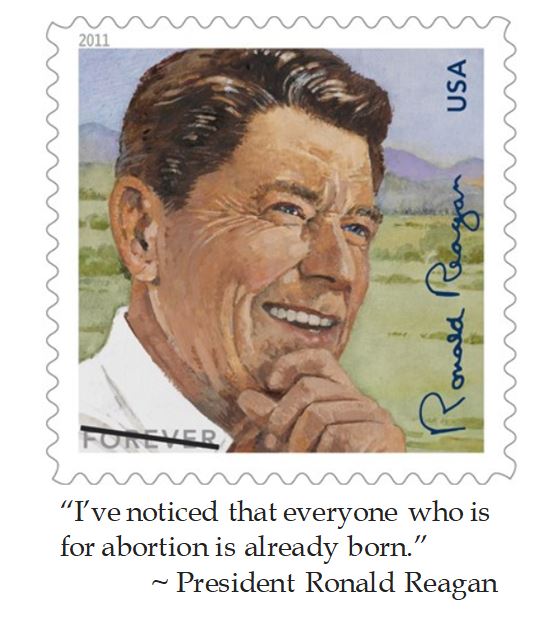
Ronald Reagan on the Constitution

President Ronald Reagan invoked the special character of the American Constitution during his Farewell Address in 1989.
Tuesday, September 12, 2017
On Celebrity Candidates and Whether Stephen King is It for Maine’s Governor

Recently, former Governor John Baldacci (D-ME) has revived an effort to draft home state author extraordinaire Stephen King to run for the top post in Maine. Aside from King’s celebrity status, the best-selling author has running grudge with the incumbent Governor Paul LePage concerning a quip that the writer left the state to avoid income taxes. Even though King issued a Shermanesque denial of candidacy in March 2017, Democrat partisans still are seeking to draft him for Governor in 2018..
 There have been some successes in celebrities turned into politicians. Obviously, President Donald Trump (R-NY) gained fame by parlaying his realty mogul status into a starring role in The Apprentice and Celebrity Apprentice before successfully running for the White House in 2016.
 President Ronald Reagan (R-CA) was a “B” movie star in the 1950s and corporate spokesman in the 1960s and was elected President for two terms in 1980.
While both Reagan and Trump got a leg up from their celebrity status both in name recognition and fundraising potential, they were outsider candidates who rallied on reformist political platforms. Reagan espoused a Western brand of conservatism, which sought to cut the size and scope of government and live up to constitutional principles. Trump identifies more with nationalist populism and an impetus to “drain the swamp” between the beltways to “Make America Great Again”. Reagan was more committed to a conservative philosophy than Trump seems to adhere to a strict ideology, but both challenged their party to go in different directions.
 There have been some other recent cases of celebrity candidates. Senator Al Franken (D-MN) was a contributor on Saturday Night Live along with having a minor movie and radio career until he won an extremel close three way Senate race in 2008. Despite his self publicity, it is dubious if Al Franken is a Giant of the Senate (2017), even tongue in cheek.

Minnesota has a knack for electing celebrity politicians as Gov. Jesse Ventura (Reform-MN) was a professional wrestler before winning a three way election in 1998. But Ventura was an outsider candidate who had several years experience being mayor of a Minneapolis suburb.

 In the recall special election to replace Governor Gray Davis (D-CA), Arnold Schwartznegger (R-CA) won the Governorship of California in 2003 against 134 other candidates. So clearly celebrity status helped in that special election, but star status did not boost all celebrities as Gary Coleman's and porn star Mary Carey's campaigns were for naught. Schwartznegger served two terms as the "Gubernator".
 Music sensation Kid Rock seems to be seriously flirting with running for Senate in Michigan in 2018. Partisans are taking a Kid Rock candidacy so seriously that the Rev. Al Sharpton sought to have Kid Rock’s concerts inaugurating Little Caesar’s Arena to be cancelled as Sharpton's group vituperatively charged that the singer was dog whistle white supremicist.
 Although they have name advantage, celebrity candidates do not always pan out well. Consider the case of Ashley Judd, who took a leap into partisan politics skewering Senator Rick Santorum (R-PA) over abortion during the 2012 Presidential campaign. Judd seriously flirted with running for Senate against Senate Majority Leader Mitch McConnell (R-KY) in 2014. But Judd opted against the run after the Democrat establishment made it clear to her that combination of being inexperienced as well as being too liberal and anti-coal doomed her candidacy.
There have been some sports stars who have parlayed their celebrity status into electoral success, such as Congressman Jack Kemp (R-NY 31st, 38th, 39th), Rep. J.C. Watts (R-OK 4th) and Senator Jim Bunning (R-KY). But all of the aforementioned officials got their start in the House.
Being in the media also has launched some political careers, such as Congressman J.D. Hayworth (R-AZ 5th) and Senator Jesse Helms (R-NC). Radio hosts tend to form a bond with their listeners but those on television tend to have more exposure. The challenge for celebrity candidates is to connect with voters by compelling keeping on message and guarding against exploitable unscripted moments. Thus it is easy for Ashley Judd to appear in anti-pro-life ads against Santorum but how does she react when her life is an open book and there is not someone off-stage feeding her lines. Or in King’s case, he is adept at taking pot shots against his bete-noire LePage but how does he sound on the stump if that is his predominant schtick? King is a good public speaker with a friendly audience but he might sound prickly with unfriendly audiences.
It is uncertain if the 69 year old King will back away from his Shermanesque refusal to run. However, Democrats are concerned about the 2018 cycle. In the Senate, Democrats have 24 of 33 seats up in 2018 with 10 vulnerable incumbents. In the states, Republican have 34 of 50 governors’ mansions.
It seems that Democrats see an opportunity to gain another statehouse against a weak incumbent Governor. Gov. LePage has a 47% favorable to 48% unfavorable rating so party insiders might think they could pick up a win with King. And having a high profile governor, even of a small state, would be useful as the national Democrat leadership fights it out as to who will lead them in the 2020 election. Along with being cajoled from Maine Democrat movers and shakers to run, King might also be swayed by that old typing exercise: “Now is the time for all good men to come to aid of their party.”

 There have been some successes in celebrities turned into politicians. Obviously, President Donald Trump (R-NY) gained fame by parlaying his realty mogul status into a starring role in The Apprentice and Celebrity Apprentice before successfully running for the White House in 2016.
  President Ronald Reagan (R-CA) was a “B” movie star in the 1950s and corporate spokesman in the 1960s and was elected President for two terms in 1980.
 While both Reagan and Trump got a leg up from their celebrity status both in name recognition and fundraising potential, they were outsider candidates who rallied on reformist political platforms. Reagan espoused a Western brand of conservatism, which sought to cut the size and scope of government and live up to constitutional principles. Trump identifies more with nationalist populism and an impetus to “drain the swamp” between the beltways to “Make America Great Again”. Reagan was more committed to a conservative philosophy than Trump seems to adhere to a strict ideology, but both challenged their party to go in different directions.
There have been some other recent cases of celebrity candidates. Senator Al Franken (D-MN) was a contributor on Saturday Night Live along with having a minor movie and radio career until he won an extremel close three way Senate race in 2008. Despite his self publicity, it is dubious if Al Franken is a Giant of the Senate (2017), even tongue in cheek.
Minnesota has a knack for electing celebrity politicians as Gov. Jesse Ventura (Reform-MN) was a professional wrestler before winning a three way election in 1998. But Ventura was an outsider candidate who had several years experience being mayor of a Minneapolis suburb.

 In the recall special election to replace Governor Gray Davis (D-CA), Arnold Schwartznegger (R-CA) won the Governorship of California in 2003 against 134 other candidates. So clearly celebrity status helped in that special election, but star status did not boost all celebrities as Gary Coleman's and porn star Mary Carey's campaigns were for naught. Schwartznegger served two terms as the "Gubernator".
 Music sensation Kid Rock seems to be seriously flirting with running for Senate in Michigan in 2018. Partisans are taking a Kid Rock candidacy so seriously that the Rev. Al Sharpton sought to have Kid Rock’s concerts inaugurating Little Caesar’s Arena to be cancelled as Sharpton's group vituperatively charged that the singer was dog whistle white supremicist. Although they have name advantage, celebrity candidates do not always pan out well. Consider the case of Ashley Judd, who took a leap into partisan politics skewering Senator Rick Santorum (R-PA) over abortion during the 2012 Presidential campaign. Judd seriously flirted with running for Senate against Senate Majority Leader Mitch McConnell (R-KY) in 2014. But Judd opted against the run after the Democrat establishment made it clear to her that combination of being inexperienced as well as being too liberal and anti-coal doomed her candidacy.
 There have been some sports stars who have parlayed their celebrity status into electoral success, such as Congressman Jack Kemp (R-NY 31st, 38th, 39th), Rep. J.C. Watts (R-OK 4th) and Senator Jim Bunning (R-KY). But all of the aforementioned officials got their start in the House.
Being in the media also has launched some political careers, such as Congressman J.D. Hayworth (R-AZ 5th) and Senator Jesse Helms (R-NC). Radio hosts tend to form a bond with their listeners but those on television tend to have more exposure. The challenge for celebrity candidates is to connect with voters by compelling keeping on message and guarding against exploitable unscripted moments. Thus it is easy for Ashley Judd to appear in anti-pro-life ads against Santorum but how does she react when her life is an open book and there is not someone off-stage feeding her lines. Or in King’s case, he is adept at taking pot shots against his bete-noire LePage but how does he sound on the stump if that is his predominant schtick? King is a good public speaker with a friendly audience but he might sound prickly with unfriendly audiences.
It is uncertain if the 69 year old King will back away from his Shermanesque refusal to run. However, Democrats are concerned about the 2018 cycle. In the Senate, Democrats have 24 of 33 seats up in 2018 with 10 vulnerable incumbents. In the states, Republican have 34 of 50 governors’ mansions.
It seems that Democrats see an opportunity to gain another statehouse against a weak incumbent Governor. Gov. LePage has a 47% favorable to 48% unfavorable rating so party insiders might think they could pick up a win with King. And having a high profile governor, even of a small state, would be useful as the national Democrat leadership fights it out as to who will lead them in the 2020 election. Along with being cajoled from Maine Democrat movers and shakers to run, King might also be swayed by that old typing exercise: “Now is the time for all good men to come to aid of their party.”

Sunday, February 5, 2017


Monday, May 2, 2016
Tuesday, March 1, 2016
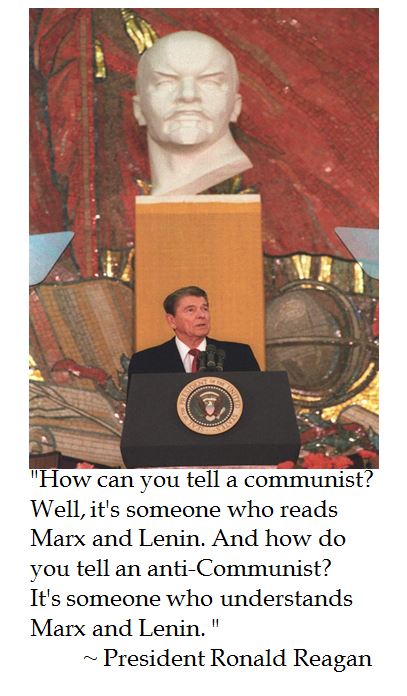
Ronald Reagan on Unwanted Endorsements

In the 2016 Presidential Primary Race, Manhattan Mogul Donald Trump has been leading the polls for over six months, but big name endorsements have been slowly trickling in. Before the Iowa Caucuses, ex Governor Sarah Palin (R-AK) came out for "The Donald". After dropping out of the 2016 race, New Jersey Governor Chris Christie (R-NJ) threw his support to the GOP frontrunner. And Senator Jeff Sessions (R-AL), who helped Trump craft his public immigration policy, now support Trump.
But there are some shows of support which most people would not want. Late last week, former Klansman David Duke said that it would like betraying the white race if his followers did not support Donald Trump. While Trump distanced himself from the Reform Party in 2000 specifically because of David Duke ant the KKK, Trump feigned ignorance of Duke when pressed about the 2016 quasi endorsement. Later Trump claimed that he was having trouble with his earpiece, even though he did not make typical technical difficulty gestures and was able to repeat Duke's name and his affiliation.
Thirty two years ago, Ronald Reagan faced an unwanted endorsement from David Duke, the Gipper had quite a different response.
Many have tried to claim the mantle of Ronald Reagan. Discerning voters can see how Trump's reaction compares to Reagan and act accordingly.
Thirty two years ago, Ronald Reagan faced an unwanted endorsement from David Duke, the Gipper had quite a different response.
Many have tried to claim the mantle of Ronald Reagan. Discerning voters can see how Trump's reaction compares to Reagan and act accordingly.
Saturday, February 6, 2016

Thursday, January 28, 2016

Friday, October 23, 2015
Plotting Pathways to Primary Victory By Thinking In Time

When chatting with a friend who is not a political junkie, I questioned if Carly Fiorina’s strong Republican Debate performances can translate into strong showings in Iowa. My friend questioned the value of the Iowa Caucuses, considering that televangelist Pat Robertson won. With the Iowa Caucuses just a 100 days away, it is worth considering the importance of the early contest and assessing paths to primary victory.
This dialogue prompted me to review all Republican and Democrat Presidential Primary campaigns since 1976. The assertion that Pat Robertson won is an understandable misconception. He actually placed in second in 2000, thus proving that a campaign need not win in Iowa, but being in the top tier is important to survive the winnowing out. In the case of Senator Fred Harris (D-OK) in 1976, a fourth place finish with 9.89% support had Harris proclaim that he was "winnowed in” the race. Iowa many not pick a winner, but it typically does thin the field out.
Favorite son candidates can sometimes do well in Iowa just because of their connection or proximity to the Hawkeye State. Arguably, this was Rep. Dick Gephardt’s (D-MO 3rd) strategy in 1988. Some thought that such connections would have similarly helped former Congresswoman Michele Bachmann (R-MN 6th) or ex Governor Tim Pawlenty (R-MN), but this pathway to success proved futile. There was some speculation that in the 2016 cycle that Governor Scott Walker (R-WI) would have greatly aided by his native Iowan ties and being a next door neighbor, but that was not enough in the 2016 election cycle.
Iowa and New Hampshire are important because they test a can test a candidates endurance, organization and strategy. Because voters in the early primary states take their participation seriously, they expect to have lots of one-on-one encounters with hopefuls (retail politics). Former Senator Rick Santorum (R-PA) won Iowa in 2012 on a shoestring budget because of a grassroots effort to have town halls in all 99 counties.
What makes the “Haweye Cauci” unique is the fact that Iowa voters take their participation seriously and expect to be courted by aspiring politicians. Then there is the challenge of getting voters to show up at the Caucuses. Not only must they be motivated to spend several hours on a snowy Iowa evening to play politics, but they must represent their candidate. There are not private ballot boxes for Caucuses so Caucus goers must argue and advocate for their candidate. Thus a “silent majority” who acts according to their principles in the sanctity of the ballot box will not do. They must go before their neighbors and plead their candidates’ cases.
 |
| Iowa Howard Dean campaigner 2004 |

The Iowa contest may only sport 30 delegates split amongst the candidates, but doing well gives what 1980 GOP candidate (and later President) George Herbert Walker Bush called “The Big Mo”. Good publicity from being win place or show in Iowa can help for the next contest in New Hampshire.
But where “the Big Mo” really matters is in the “Invisible Primary” for donor dollars. When primary voters start selecting candidates (as Iowans do not vote), traditionally financial supporters either open the floodgates or cut off the flow of funds. People like to bet on winners and may jump on the bandwagon to curry favor with underdogs who outperform expectations. Some may claim that the “Invisible Primary” ends before selection process begins, because money in the bank allows for prudent allocation of resources. But sometimes candidates on the brink of financial collapse, like Senator John McCain in 2008 or Senator Rick Santorum’s shoestring start in 2012, needed the infusion of finances and publicity after doing well (or significantly beating expectations) in Iowa.

Doing well in the donor primary makes a difference in expanding organization and financing media buys several weeks down the road to effectively compete in a series of contests held on the same day, like the SEC primaries (March 1st) or in a populous and diverse state in which wholesale politics is essential, like Florida (March 15th)
In 2016, the GOP has rules that primaries before March 15th may have proportional distribution of delegates, after that time it is winner take all. Party rules this cycle also require candidates to win six contests. Candidates need to find their pathway to victory.
Some Republican candidates choose not to put as much emphasis on Iowa as it is not a reliable predictor of success and the agrarian and evangelical midwestern voters may not suit certain campaigns. The eastern and western edges of Iowa seem to vote for more urban and moderate candidates in GOP primaries while the center of the state can be characterized as quite evangelical and values voters. Santorum squeaked out a victory in 2012 with a campaign appealing to value voters and retail politics. Governor Mike Huckabee (R-AR) beat Governor Mitt Romney (R-MA) 30%-27% by winning with “very conservative” voters, many of whom were evangelical value voters.
The importance of Iowa was demonstrated by the quick reversal of a social media faux pas by Donald Trump. The brash businessman has earned a reputation of raring for a fight and never backing down. While Mr. Trump has been top of the Republican polls for the last 100 days, but a recent poll showed that he dropped in second place in the Hawkeye State behind another outsider candidate Dr. Ben Carson. Trump's Twitter account, which he had leveraged for publicity to personally comment during the Democrat debate, forwarded a snarky dismissal of the poll, denegrating Iowans.

Within a couple of hours, the Trump campaign deleted the tweet and expressed the regret for a young intern for the gaffe. OK. so much for spoiling for a fight and never backing down as well as the aura of authenticity. But it goes to show the importance of not offending Hawkeyes and alienating the Charm of Iowa Stubborn

If not Iowa, Republican candidates have to rely on doing well in New Hampshire, the first primary state. The Granite State had a long reputation for picking Republican winners, with a couple of notable recent excecpion. Typically, New Hampshire voters are contrarian rejecting Iowa’s lead. Candidates sometimes camp out there to do tons of town hall meetings to maximize retail politics. Senator John McCain (R-AZ) used it as his breakout moment in 2008. Conventional wisdom is that if you don’t do well in Iowa or New Hampshire, it is wise to hang it up.
A few contemporary candidates have sought to eschew the Iowa Caucuses and the First Primary in New Hampshire, much at their peril. In 2008, Mayor Rudy Giuliani (R-NYC) calculated that he would win the Sunshine State due to the number of transplanted New Yorkers. So he essentially skipped Iowa, New Hampshire, Michigan, South Carolina and Nevada. To his chagrin, Giuliani only garnered 14.7% of the vote. On top of that, any delegates won were cut in half since the Florida primary was held too early for Republican rules.
In 2012, Gov. Jon Huntsman (R-UT) iconoclastically set up his campaign HQ in Orlando thinking that Florida would lead to victory. But Huntsman came in third in New Hampshire and dropped out by Florida.
The 2016 GOP Primary cycle features a crowded field and seems strongly influenced by debate performances. After the second debate at the Reagan Library, businesswoman Carly Fiorina catapulted up to third place in the national polls. All of that is well and good, but political pundits need to consider what is her plausible path to victory? At this late stage in the campaign, can an unknown candidate build an organization for effective retail politics in the caucuses or does someone like Fiorina hope that Granite State contrarianism carries the day? Would publicity from an early primary win be enough to build a successful campaign for the SEC primaries or is the hope to be the last acceptable alternative to a frontrunner or establishment candidate?
Frontrunners in the summer before a Presidential campaign year typically do not get the nomination, otherwise there might have been a President Dean (2004), President Gephardt (2008) or President Giuliani (2008). Hardball questions often hinder early frontrunners. The trick is to peak and the right time and not get in too late. In the 1980 cycle, then former Governor Ronald Reagan only announced his candidacy in November 1979 and had to rush to organize for Iowa. But back then a late entry was feasible. In the summer of 2007, Senator Fred Thompson (R-TN) announced in late for the 2008 primaries and had trouble getting traction and fundraising. In 2011, Governor Rick Perry (R-TX) joined the 2012 GOP primaries after the Ames Straw Poll, but was hindered by the late start and a monumentally bad debate performance.
In the 2016 cycle, it has been postulated that Senator Ted Cruz (R-TX) is wisely waiting in the background to pounce when the primaries start. Cruz was the first to announce with a strong religious liberty stance that would appeal to evangelical voters. Cruz is accused by Republican Party elites for pushing for show votes on principled policies (e.g. really repealing Obamacare, Iran Nuke Deal, defunding Planned Parenthood) which underline his “outsider” bona fides while still serving in the District of Calamity. Cruz has a strong campaign war chest. All signs point to strong organization in early contests and the SEC primaries. Cruz is also competing in very small contests (like Guam and Puerto Rico) which are essential to winning enough contests to be considered for nomination. Cruz is a skilled debater who has made good use of the limited time he has been given in debates and he has not made enemies with his opponents. Yet at the beginning of autumn 2015, Cruz is placing 5th out of 15 with 8% support in polls.
Cruz’s path to victory would need to do well in Iowa (especially with very conservative and evangelical voters), be competitive in New Hampshire, rebound in conservative South Carolina and then be successful in the bulk of SEC primaries (including his home state of Texas) on March 1st. This slow and steady success strategy does not have the sizzle of Trump or the establishment imprimatur for former Governor Jeb Bush (R-FL), but is solid strategy that has a pathway to victory. Whether or not this works remains to be seen.
Looking at the GOP primaries methodically may not be as much fun as hobnobbing about the horse race with always changing polls, but it understands the primary process and gives benchmarks for successful strategy rather than a blind bandwagon approach to campaigns.
Monday, August 24, 2015

Tuesday, July 28, 2015
Senator Ted Cruz on "The 11th Commandment"

Senator Ted Cruz (R-TX) made a piercing floor speech denouncing the tactics of Majority Leader Senator Mitch McConnell (R-KY) of reneging on promises about floor votes over the Export-Import Bank. Majority Leader McConnell used the parliamentary tactic of "filling the amendment tree" to only add the Export Import Bank Amendment to the must pass Senate Highway Bill and a symbolic Repeal Obamacare vote (which was doomed to fail cloture), Senator Cruz lambasted protecting the vested interests of the Washington Cartel through legislative legerdemain which ousted Senate Majority Leader Senator Harry Reid (D-NV) made famous.
Thereafter, it was unlikely that Senator Cruz was going to be invited to any future Cocktail Parties by the Washington establishment. But Grand Old Party establishment grey beards like Senator Orrin Hatch (R-UT) and Senator John Cornyn (R-TX), denounced the lack of decorum, which opaquely criticized the Junior Senator from Texas. Of course these attacks were more restrained than earlier criticisms of young turk's aggressive ways in Washington, which colleague Senator John McCain affectionately attributed as "wacko birds".
Ronald Reagan had popularized the political "11th Commandment" -- to not speak ill of your fellow Republican. In fact, Senator Cruz has been conspicuous for not denouncing Donald Trump because Cruz does not want to attack fellow Republicans on the campaign trail. Charles Krauthammer considers Cruz's floor speeches to be an example of hypocrisy.
The question is whether telling the truth is included in Reagan's 11th commandment is key to discerning party loyalty.
Senator Cruz has been positioning himself as an insider campaigning for the Oval Office as an outsider. Cruz has also bucked the Republican Senate Leadership's "go along to get along" modus operandi through the budgetary filibuster in September 2013 which caused the federal government to shut down for over a fortnight.
Many have attributed the wave of support for Republican Presidential candidate Donald Trump to dissatisfaction with Do Nothing Republicans who will not speak the truth. If the Trump boomlet ends, has Ted Cruz positioned himself to gain the support of those who want to Make DC listen again?
A broader question for the Grand Old Party faithful is whether the electorate should not register their protest for elected officials that campaign one way but govern in another that is almost indistinguishable from the Democrat opposition.
Wednesday, May 6, 2015
The Huckster on Running for Higher Office

Former Governor Mike Huckabee (R-AR) has distinguished himself as a candidate for the Republican nomination in 2016 by coming out of the gate attacking his fellow Republican opponents.
Perhaps it was lost for Gov. Huckabee on the mythical "third tablet" of Mount Sinai.
Several of the top tiered GOP presidential candidates, Senator Ted Cruz (R-TX), Senator Rand Paul (R-KY) and Senator Marco Rubio (R-FL) are "moonlighting" for the GOP nod as they continue their elected roles in the U.S. Senate. It should be noted, however, that Senator Rubio has vowed not to seek re-election for the Florida Senate seat as he threw his hat in the ring for President.

Obviously, Governor Huckabee is not observing the Reagan 11th commandment "Thou shall not speak ill of thy fellow Republican".
Be that as it may, we need not judge Gov. Huckabee on words alone, as this is not his first time to the presidential rodeo.
It is true that Governor Huckabee was not holding office when he ran for President in 2008, as his term in Little Rock expired January 8, 2007. However, the telling fact is whether "The Huckster" applied the same standard to his 2008 opponents as he did to the current crop of candidates.
Of Governor Huckabee's many swipes against his opponents in the 2008 cycle, he was remembered for spreading anti-Mormon innuendo against former Governor Mitt Romney (R-MA) rather than taking pot shots against Senator John McCain (R-AZ) for holding office while running for President.
If Governor Huckabee folksy populist quest for higher office is not successful, there is little chance of going back to his gig at Fox News, after trash talking "the trashy" women on Fox News Channel,
Friday, March 13, 2015
There's More Than a Snowflake's Chance that Ted Cruz is Running for the White House

At this point of the 2016 Presidential election cycle, most prospective Presidential nominees are playing coy about their intentions to run for the White House. Many media personalities will jocularly try to get a story by coaxing the candidate to declare his or her intentions on the air. Serious candidates need to sound interested to prospective supporters, yet not proverbially put the cart before the horse by declaring not at a time and place of their own choosing.
So Glenn Beck's exchange with Senator Ted Cruz (R-TX) at the end of a lengthy radio interview included the obligatory "ask". However, the junior senator from Texas gave a memorable deflection.
When some politicians claim quote their children, it sounds as if the kids were cued off of a teleprompter. An infamous example was President Jimmy Carter's alleged exchange with daughter Amy about the dangers of nuclear war during a 1980 debate with Ronald Reagan.
The quote from Caroline Cruz certainly sounds like a six year old's logic. While the quip intimated that the family blesses Senator Cruz intention to throw his hat in the ring, it also served as a light hearted feint to the question of declaring.
Running for President is a grueling effort to constantly travel, raise funds, react to opposition in real time and try to project a positive prospective policy. Many politicians refrain from continued combat in the political arena to supposedly spend more time with family. It is a twist to conventional logic to a family to encourage a campaign to gain a back yard for a dog.
Yes Caroline, there is more than a Snowflake's chance in Texas that Ted Cruz is running for the White House. But now was not the time to color in that picture and say it with surety.
Friday, February 6, 2015
Tuesday, January 6, 2015

Tuesday, November 11, 2014
Thursday, October 2, 2014
Celebrating Failed Presidents?
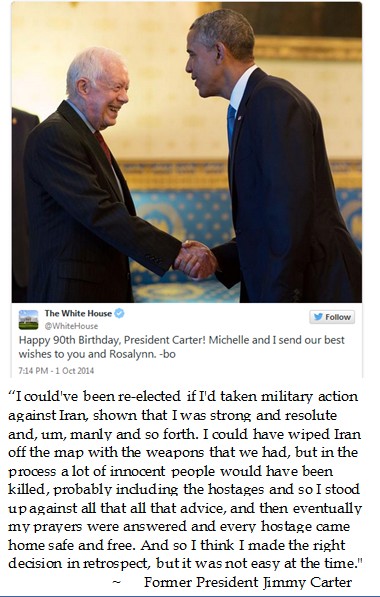
Mr. Carter's self-serving quote failed to account for two factors as he celebrated his foreign policy strategerie (sic). Firstly, President Carter did attempt a military operation to free the hostages in April, 1980.
 Operation Eagle Claw was an abortive attempt by the US military to rescue the hostages. As the eight US helicopters advanced to the Desert One staging area, only five were in operational conditions (hindered by fine sand, hydraulic issues and a crack in the rotor blade). The assault was called off, but one of the helicopters crashed into a transport aircraft full of jet fuel, which destroyed both aircraft and killed eight servicemen).
  Although Operation Eagle Claw may not have been an apocalyptic military operation, it may have been propelled by politics. President Carter was engaged in a tough battle for the Democrat Presidential Nomination with Senator Edward Kennedy (D-MA). In fact, President Carter lost several key primary contests in April 1980 (Pennsylvania, Michigan and Vermont) and was seriously losing momentum.
 Although the failed rescue attempt did generate a lot of scorn for Carter, it also seemed to quash his political insurgency. After Operation Eagle, the rally around the flag instinct which Democrats of the day still had for the military cut Kennedy's mojo. So Mr. Carters self righteous reminiscing about not using the powers of the Presidency to get re-elected is questionable.
 In addition, Mr. Carter intimates today that the hostage release was an answer to his prayers and in the end it all worked out. While one should not dismiss the power of prayer, it seems more likely that the Islamic Republic of Iran worrying about what "that crazy cowboy" Reagan in the Oval Office would do. Moreover, one should not discount the gesture from Tehran to be one last insult to the Peanut President.
 To celebrate President Carter's milestone birthday, President Barack Obama chose to celebrate himself on social media by posting a photo featuring the 39th and 44th Presidents together. Of course, Mr. Obama has a history of using his image for branding when supposedly celebrating others, like his social media tribute to Neil Armstrong's death or Rosa Parks' passing.
 Funny how failed President's celebrate themselves. Some things never change, despite the rhetoric to the contrary. Some wags have wondered if Barack Obama is the second coming of Jimmy Carter.
However, now Carter can take solace that he is no longer considered with worst President in modern American history.
Tuesday, September 16, 2014

Thursday, May 22, 2014

Subscribe to:
Posts (Atom)